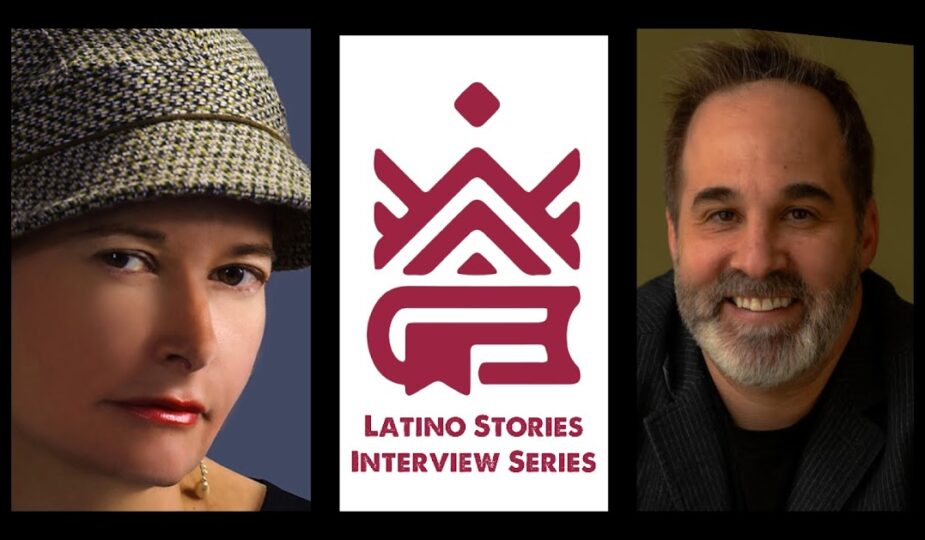
Feeling Home: Teresa Dovalpage Interviews Kase Johnstun
Kase Johnstun lives and writes in Ogden, Utah. He is the manager for the Utah Center for the Book and Utah’s Affiliate to the Library of Congress. Along with his forthcoming novel Cast Away, he is the author of the award-winning novel Let the Wild Grasses Grow and the award-winning memoir Beyond the Grip of Craniosynostosis. He comes from a long history of Cordovas and Chavezes from the southwest, and his published essays that navigate the uncompromising questions of what it means to be half Hispanic/Latino and a half descendant of Mormon pioneers have been published in LatinX Lit Mag, Label Me Latino/a, Under the Gum Tree, and many other places.
Dovalpage: Every book has a seed, a spark that sets the plot into motion in the writer’s mind. What was the spark for Cast Away?
Johnston: When it comes to my novels, there is a lot of me in them. With Cast Away, it started when we were visiting Chelem, Yucatan, and I loved the little fishing village, but in so many ways I am Chuy. I grew up in Utah, non-LDS, with a mom and grandparents who were Hispanic/Neo-Mexicano (though they were always “just Mexican” as my grandparents would put it), with a loving father whose parents didn’t keep us in their lives because my mom was Catholic and Hispanic, so I never knew my Johnstun side and always felt on the outside in Utah. If you were non-LDS in Utah in the 1970s, ‘80s, and ‘90s, you lived outside the fold. I played on baseball teams where all the kids went to the same ward house and ignored or made fun of me, things that Chuy experiences in the book. With Veronica, there is always a bit of my grandma Chavez Cordova in my characters. She was never mean like Veronica in the beginning, but she was always sharped tongue and loving. There’s so much of me and her here..
Dovalpage: Veronica is a great character! And readers will definitely get a good idea of what it was like living in Utah from the 70s to the 90s. Now, the novel also contains a lot of detailed information about the 20s, particularly the life of Mexican railroad workers. What was the research process like? Did it take you a long time to collect all the data?
Johnstun: My grandpa Cordova worked the railroads. After being a cook in WW2, the railroads took him from Colorado to Nevada (my mom was born in a railroad track house in Elko, Nevada) and then to Utah. Ogden, Utah, where I’m from is a railroad town. Our city was built by the railroad and the Chinese and Mexican immigrants that literally built it. I love research, so I just followed my passion.
Dovalpage: And it shows! I learned a lot about it. There are many references to food in the novel. Do you have a personal favorite Mexican dish? What is it?
Johnstun: YES! Every Sunday, we went to my grandma Cordova’s house for beans, tortillas, fresh salsa from my grandpa’s garden, fried corn, fried potatoes with ketchup, bunuelos, all the best food that feels like home to me. I miss those days so much. All my aunts and uncles and cousins would show up and stay all day. It’s home to me. My favorite is so simple. Just like Veronica cooked in the book, pinto beans and butter in a homemade tortilla. We would eat them at my grandma’s, but she would also wrap them up and tin foil and send them with us when all the boys when hunting, and my grandpa and I and my dad and cousins would toss them on the fire to heat them up. We carried her house with us to the mountains.
Dovalpage: Chico, I am getting hungry here. Tortilla con frijoles pintos, qué yummy! Bueno, the characters are relatable and very human. (I can actually hear Veronica curse and laugh…and sometimes cry.) How did you flesh them out?
Now retrieving an image set.
A Court of Splintered Harmony: The Valkyrie Cycle, Movement I (A Court of Thorns and Roses, 6)
$22.38 (as of October 21, 2026 21:18 GMT -04:00 – More infoProduct prices and availability are accurate as of the date/time indicated and are subject to change. Any price and availability information displayed on [relevant Amazon Site(s), as applicable] at the time of purchase will apply to the purchase of this product.)
Now retrieving an image set.
Fight or Flight (Diary of a Wimpy Kid #21) (Volume 21)
$10.97 (as of October 21, 2026 21:18 GMT -04:00 – More infoProduct prices and availability are accurate as of the date/time indicated and are subject to change. Any price and availability information displayed on [relevant Amazon Site(s), as applicable] at the time of purchase will apply to the purchase of this product.)
Now retrieving an image set.
Simply Ina: A Barefoot Contessa Cookbook
$26.00 (as of October 21, 2026 21:18 GMT -04:00 – More infoProduct prices and availability are accurate as of the date/time indicated and are subject to change. Any price and availability information displayed on [relevant Amazon Site(s), as applicable] at the time of purchase will apply to the purchase of this product.)Johnstun: The kind side of Veronica came from my grandma Cordova. Chuy, like I mentioned before, came a lot from me and feeling like the ‘other’ in Utah my whole life. It was easy to write him in Provo, Utah.
Dovalpage: I felt there while reading the book, for sure. And what is your writing process like?
Johnstun: I like coffee in the morning before the world wakes up. I try to write five days a week, but it doesn’t always happen. I wake up, and I read poetry. When I get lost in the world of beautiful words, I jump into my own work.